


Quick Summary
Consumers now use social apps (TikTok, Instagram, YouTube, Reddit) to search for products, reviews, and answers. Social search feels more personal and visual than traditional search engines. Businesses should optimize social profiles with clear keywords, create content that answers customer questions, add text to videos, and post for every stage of the buyer journey. Social proof (comments, reviews, customer stories) builds trust. Traditional SEO still matters, but a strong social search strategy helps brands get found where people are looking.
Estimated read: 5 min
Keywords: social media search engine, social search strategy, customer journey, social proof, TikTok SEO, Instagram search
|
Consumers no longer rely solely on Google for answers. Today, many people search directly inside apps to discover brands, compare products, and decide what to buy. That is why social media is the new search engine: what businesses should do has become a major marketing question.
Social Media Today reports that shoppers now use social apps to find answers, products, and ideas. This does not mean Google has disappeared. However, it does mean businesses need to show up in more places than before.
People still use a search engine, but they also want quick, visual, and trusted answers from social apps. As a result, social search is now part of the customer journey.
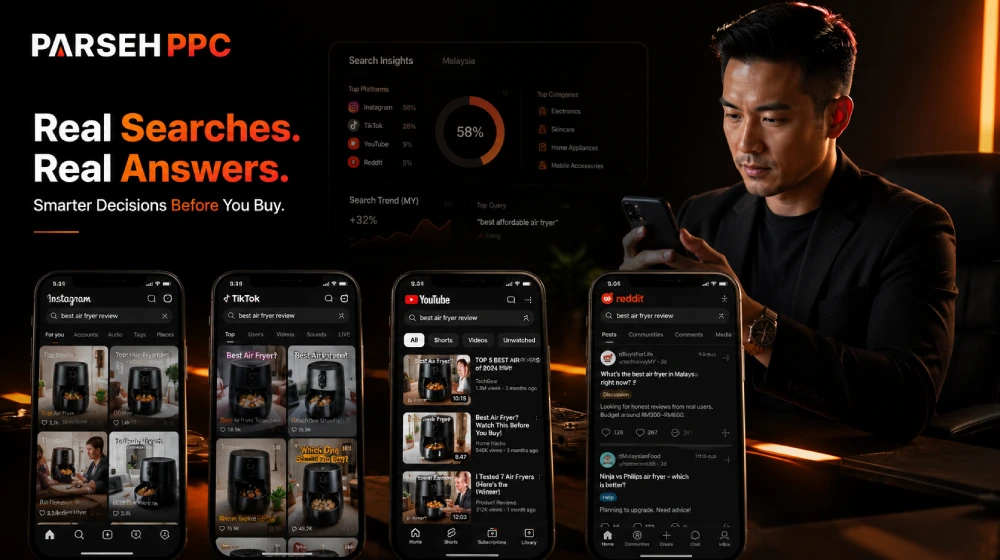
People use social media platforms because they want real examples. They do not always want a long article or a list of links. Often, they want a short video, a customer review, a creator’s opinion, or a quick answer.
For example, someone looking for skincare tips may search on TikTok or Instagram before using Google. A shopper looking for a restaurant may check Instagram Reels, tagged photos, and comments before reading a website.
This matters because social search feels more personal. Users can see how a product or service works in real life. They can also read other people’s comments before making a choice.
The customer journey is no longer simple. Many shoppers first discover brands on TikTok. Then, they read Reddit reviews, visit the company website, and return to Instagram before making a purchase.
Because of this, social content now plays a bigger role in discovery. It helps people learn, compare, and trust a brand before they click.
For business owners, this creates a clear opportunity. Social media is not just for posting updates. It can help people find your brand when they are actively looking for answers.
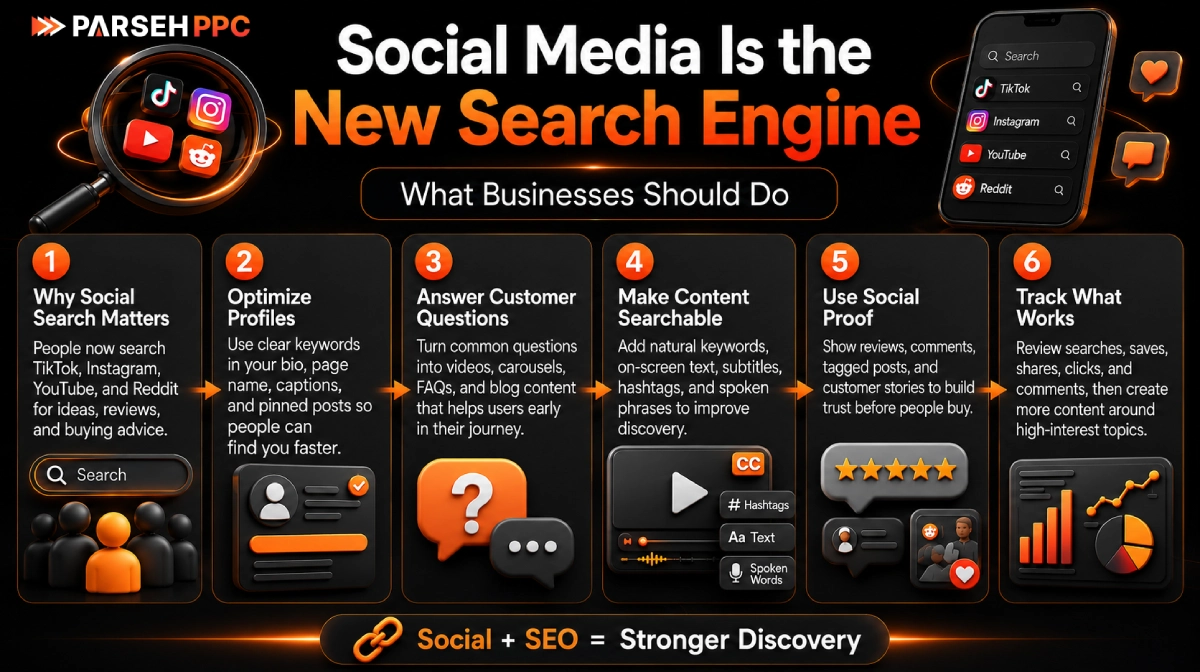
Your social profile should clearly explain what you offer. Use simple words in your bio, page name, captions, and pinned posts.
A bakery should not only say “fresh treats daily.” It should mention “custom birthday cakes,” “wedding desserts,” or “gluten-free cupcakes” if those are key offers.
Clear wording helps both users and platforms understand your business.
People search with questions. Therefore, your content should answer those questions directly.
Good topics include:
These questions can be turned into videos, carousels, FAQs, or a full blog post.
| Optimization Area | Why It Matters | Recommended Action |
|---|---|---|
| Social Profile Keywords | Helps users and platforms understand your business | Use clear descriptions and searchable terms in bios |
| Video Text & Subtitles | Improves discoverability inside apps | Add on-screen text, captions, and spoken keywords |
| Customer Questions | Matches real search intent | Create content around FAQs and buying concerns |
| Social Proof | Builds trust and credibility | Share reviews, tagged posts, and customer stories |
| Buyer Journey Content | Supports both awareness and conversion | Post educational and ready-to-buy content |
| Analytics & Data Review | Helps improve future content strategy | Track shares, saves, clicks, and comments regularly |
Do not stuff keywords into every caption. Instead, use the same words your customers use.
For example, “easy meal prep for busy parents” is clearer than “fresh lifestyle solutions.” The first phrase tells people exactly what the content is about.
This also helps your post appear as a useful search result inside social apps.
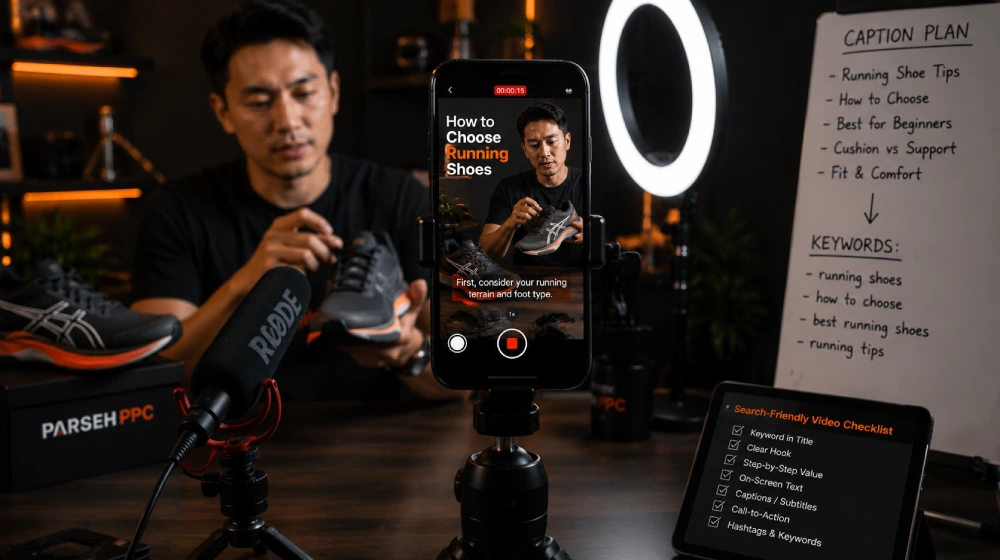
Social platforms can understand more than captions. They also read video titles, on-screen text, subtitles, hashtags, and spoken words.
So, if your video explains “how to choose running shoes,” say that phrase in the video and place it on the screen. This makes the content easier to understand and easier to find.
Some people are just learning. Others are ready to buy. Your content should support both groups.
For early-stage users, create educational posts. For ready-to-buy users, share reviews, demos, offers, and customer stories.
This balanced approach can support both brand awareness and sales.
People trust people more than ads. That is why comments, reviews, tagged posts, and customer stories matter so much.
When users see real people talking about a brand, they feel more confident. A polished ad may get attention, but real feedback often builds stronger trust.
Businesses should ask happy customers to share their experience. They can also repost customer photos, reviews, and short videos. This helps new buyers feel safer before taking the next step.
Not every platform works the same way. Each one has a different search style.
TikTok works well for quick tips, product demos, and how-to videos. Instagram is strong for visual discovery, lifestyle content, and local business searches. YouTube works well for deeper tutorials. Reddit can influence trust because users often search for honest opinions.
That means businesses should adapt their content for different social media channels rather than posting the same thing everywhere.
| Platform | How Users Search | Best Content Type |
|---|---|---|
| TikTok | Quick tips, product discovery, tutorials | Short videos, demos, how-to content |
| Visual inspiration and local business search | Reels, carousels, customer photos | |
| YouTube | Deep learning and product research | Tutorials, reviews, educational videos |
| Honest opinions and user experiences | Community discussions and recommendations | |
| Google Search | Detailed information and comparisons | Blog posts, landing pages, SEO content |
Social search is growing, but website SEO still matters. A strong website gives your brand a home base. It also helps people learn more after they find you on social media.
For example, a short TikTok video can introduce a topic. Then a detailed blog post can explain it further. Together, both pieces of content help users move from interest to action.
Google also recommends using clear and descriptive anchor text so users understand where a link will take them. This same idea applies to social content. Clear words help people and search systems understand your message.
Businesses should not guess what people want. Instead, review search terms, comments, saved posts, shares, website clicks, and direct messages.
Reports like the Digital 2026 overview show that online behavior continues to change across platforms. So, brands need to regularly review their content and adjust it based on real user behavior.
If people keep asking the same question, create content around it. If one video brings traffic, turn that topic into more posts, ads, and website content.
Social media is now part of how people search, learn, and buy. Businesses that understand this shift can reach customers earlier and build trust faster.
The goal is not to stop using Google or traditional SEO. The goal is to build a stronger search presence across every place customers look for answers.
Brands that create clear, helpful, and searchable content will have the advantage. They will not just post more. They will help people find the right answers at the right time.